Best D&D 5e class at level 1: tier list from 432K battles
BattleCast simulates 432,000 level 1 class battles to rank every D&D 5e class in solo and team fights, with Sorcerer on top.
What's the best class to play at level 1 in D&D 5e? We ran a round-robin tournament of all twelve classes - both 1v1 duels and 3v3 skirmishes - across 432,000 simulated battles to find out. Sorcerer wins both formats, Barbarian is the only martial in the top three, Wizard scales the most going from solo to team, Bard collapses 26 points when stacked three deep, and Druid sits at the bottom of both tables. Every class is built on the same 72-point ability budget. Full cross-tables and per-class rankings below - click any cell to load the matchup in the simulator.
The twelve classes at level 1
Heavy-armor martials, lightly-armored skirmishers, full casters with two spell slots. Twelve different answers to "what does a level-1 character do in a fight":
| Class | HP | AC | Key trait | Best attack | |
|---|---|---|---|---|---|
 | Barbarian | 14 | 14 | L1 - Rage | Greataxe (1d12+3) |
 | Bard | 10 | 14 | L1 - Spellcasting | Rapier (1d8+2) |
 | Cleric | 10 | 18 | L1 - Spellcasting | Warhammer (1d8+2) |
 | Druid | 10 | 16 | L1 - Spellcasting | Quarterstaff (1d8) |
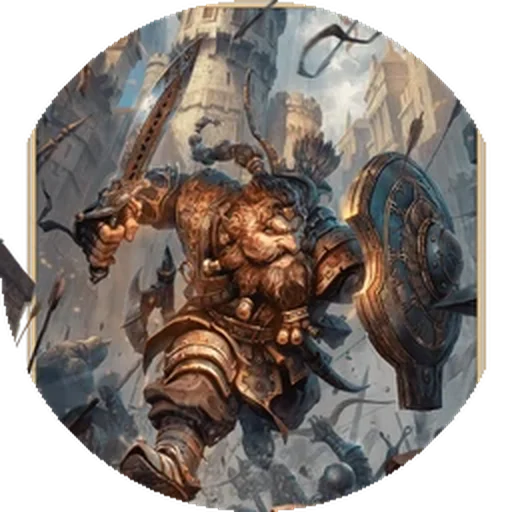 | Fighter | 12 | 19 | L1 - Fighting Style: Defense | Longsword (1d8+3) |
 | Monk | 10 | 15 | L1 - Martial Arts | Martial Arts (Unarmed) (1d6+3) |
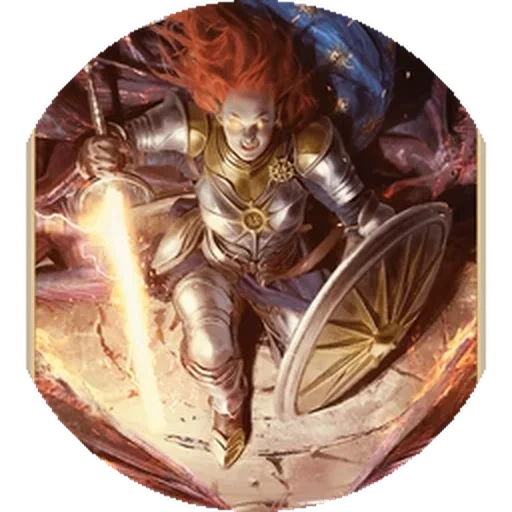 | Paladin | 12 | 18 | L1 - Lay on Hands | Longsword (1d8+3) |
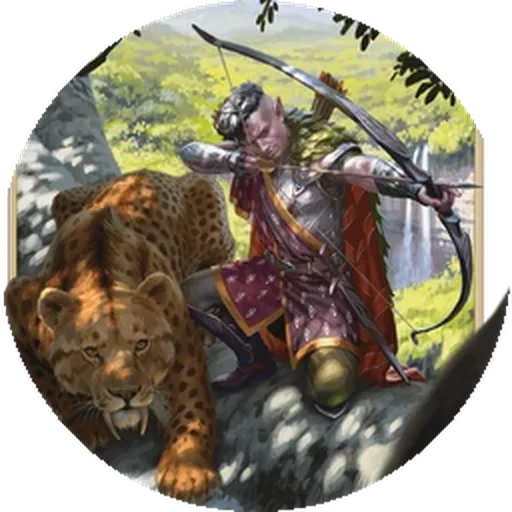 | Ranger | 12 | 16 | L1 - Spellcasting | Longbow (1d8+3) |
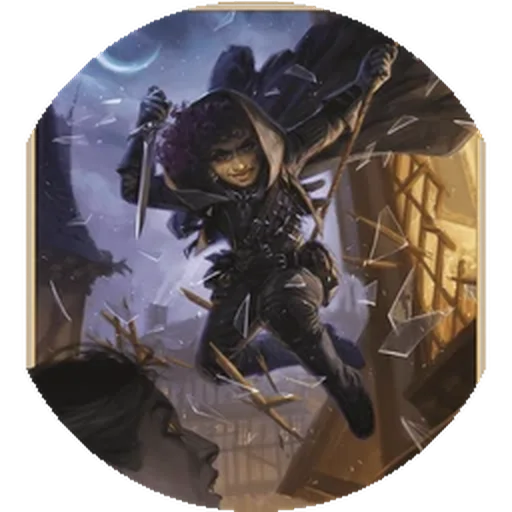 | Rogue | 10 | 15 | L1 - Expertise | Rapier (1d8+3) |
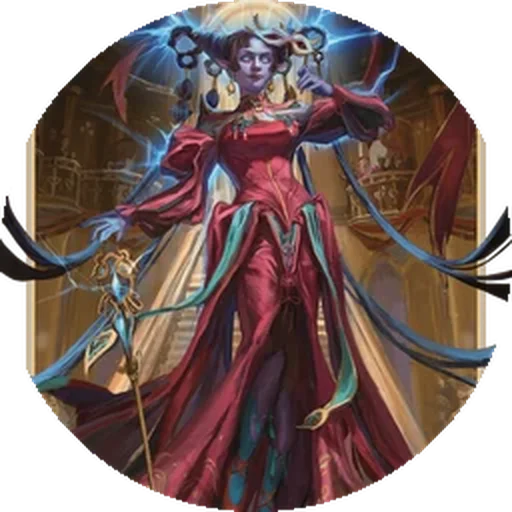 | Sorcerer | 8 | 12 | L1 - Spellcasting | Quarterstaff (1d8-1) |
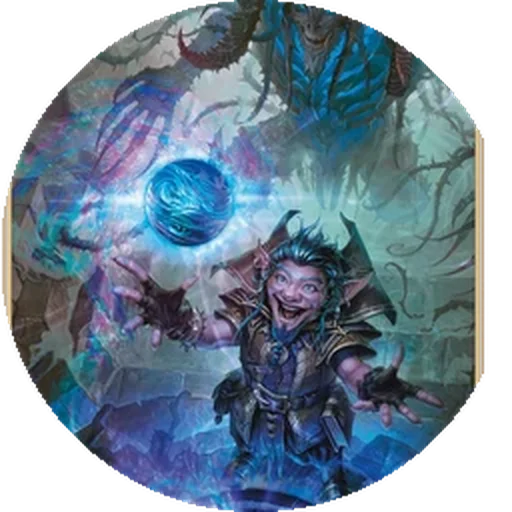 | Warlock | 10 | 14 | L1 - Pact Magic | Dagger (1d4+2) |
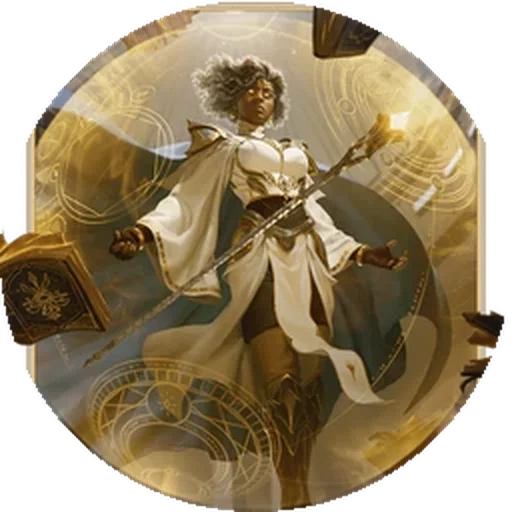 | Wizard | 8 | 12 | L1 - Spellcasting | Quarterstaff (1d8) |
Every class uses an identical 72-point ability budget (one 16, three 14s, two 10s, one 8) - matched to the class's primary, secondary, and CON. Standard equipment, no feats, no magic items. Every fight runs Both Smart on a clean grid - no maps, no terrain confounds, no shared parties. The goal is to isolate the class itself, not the encounter design around it.
Experiment 1: 1v1 duels
Each cell is the row class's win rate over 2,000 duels against the column class. Rows and columns are sorted by row average (strongest top-left). Click a cell to open the duel in the simulator.
| red ↓ / blue → | Sorcerer | Barbarian | Cleric | Fighter | Wizard | Paladin | Bard | Warlock | Rogue | Ranger | Monk | Druid | avg |
|---|---|---|---|---|---|---|---|---|---|---|---|---|---|
| Sorcerer | - | 61% | 66% | 66% | 51% | 74% | 67% | 64% | 66% | 64% | 100% | 98% | 71% |
| Barbarian | 37% | - | 44% | 75% | 68% | 77% | 57% | 54% | 81% | 90% | 100% | 91% | 70% |
| Cleric | 36% | 58% | - | 48% | 44% | 52% | 66% | 69% | 69% | 73% | 82% | 93% | 63% |
| Fighter | 32% | 25% | 51% | - | 60% | 52% | 47% | 66% | 69% | 81% | 92% | 94% | 61% |
| Wizard | 49% | 33% | 57% | 41% | - | 42% | 62% | 61% | 58% | 48% | 93% | 93% | 58% |
| Paladin | 26% | 23% | 49% | 47% | 59% | - | 43% | 63% | 68% | 78% | 88% | 90% | 58% |
| Bard | 31% | 42% | 31% | 53% | 38% | 56% | - | 48% | 47% | 56% | 95% | 86% | 53% |
| Warlock | 34% | 47% | 32% | 37% | 37% | 36% | 53% | - | 49% | 53% | 68% | 83% | 48% |
| Rogue | 37% | 21% | 29% | 31% | 42% | 31% | 53% | 49% | - | 47% | 67% | 84% | 45% |
| Ranger | 36% | 9% | 26% | 19% | 51% | 20% | 43% | 49% | 52% | - | 59% | 84% | 41% |
| Monk | 0% | 0% | 18% | 8% | 9% | 11% | 5% | 34% | 34% | 41% | - | 34% | 18% |
| Druid | 2% | 8% | 6% | 6% | 9% | 9% | 15% | 19% | 14% | 16% | 66% | - | 15% |
Duel ranking
- 1Sorcerer71%
- 2Barbarian70%
- 3Cleric63%
- 4Fighter61%
- 5Wizard58%
- 6Paladin58%
- 7Bard53%
- 8Warlock48%
- 9Rogue45%
- 10Ranger41%
- 11Monk18%
- 12Druid15%
Experiment 2: 3v3 skirmishes
Three of the same class per side, identical placement and tactics. Each cell is 1,000 skirmishes. Three same-class fighters can absorb hits and trade attacks; three same-class wizards can spread Fire Bolts; three same-class clerics can stack healing. The team format lets resource-based mechanics (spell slots, Bardic Inspiration, Healing Word, Hunter's Mark) actually breathe in a way the duel does not.
| red ↓ / blue → | Sorcerer | Barbarian | Wizard | Fighter | Paladin | Cleric | Rogue | Ranger | Warlock | Bard | Monk | Druid | avg |
|---|---|---|---|---|---|---|---|---|---|---|---|---|---|
| Sorcerer | - | 72% | 55% | 75% | 85% | 95% | 69% | 67% | 73% | 93% | 96% | 100% | 80% |
| Barbarian | 28% | - | 40% | 84% | 86% | 72% | 83% | 93% | 63% | 99% | 100% | 98% | 77% |
| Wizard | 51% | 60% | - | 47% | 60% | 92% | 66% | 66% | 75% | 89% | 91% | 100% | 72% |
| Fighter | 25% | 16% | 52% | - | 62% | 61% | 66% | 82% | 84% | 90% | 98% | 99% | 67% |
| Paladin | 15% | 12% | 37% | 37% | - | 50% | 60% | 75% | 82% | 84% | 98% | 96% | 59% |
| Cleric | 6% | 30% | 11% | 37% | 47% | - | 63% | 75% | 66% | 81% | 93% | 100% | 55% |
| Rogue | 32% | 17% | 31% | 35% | 40% | 37% | - | 44% | 57% | 86% | 81% | 96% | 51% |
| Ranger | 35% | 9% | 38% | 21% | 29% | 25% | 55% | - | 58% | 78% | 75% | 96% | 47% |
| Warlock | 26% | 39% | 28% | 16% | 19% | 31% | 44% | 46% | - | 74% | 65% | 93% | 44% |
| Bard | 8% | 1% | 11% | 11% | 17% | 21% | 14% | 24% | 24% | - | 78% | 93% | 27% |
| Monk | 6% | 0% | 9% | 1% | 3% | 9% | 20% | 22% | 36% | 20% | - | 54% | 16% |
| Druid | 0% | 1% | 0% | 2% | 2% | 0% | 3% | 4% | 3% | 3% | 47% | - | 6% |
Skirmish ranking
- 1Sorcerer80%
- 2Barbarian77%
- 3Wizard72%
- 4Fighter67%
- 5Paladin59%
- 6Cleric55%
- 7Rogue51%
- 8Ranger47%
- 9Warlock44%
- 10Bard27%
- 11Monk16%
- 12Druid6%
Who scaled up, who scaled down
The more interesting question is which classes shift between formats. The table below is sorted by the largest scale-up - the class whose 3v3 win rate is highest above its 1v1 win rate.
| Class | 1v1 win % | 3v3 win % | Δ (3v3 - 1v1) |
|---|---|---|---|
| Wizard | 58% | 72% | +14.5 pp |
| Sorcerer | 71% | 80% | +9.2 pp |
| Barbarian | 70% | 77% | +6.5 pp |
| Ranger | 41% | 47% | +6.3 pp |
| Fighter | 61% | 67% | +6.0 pp |
| Rogue | 45% | 51% | +5.8 pp |
| Paladin | 58% | 59% | +1.0 pp |
| Monk | 18% | 16% | -1.5 pp |
| Warlock | 48% | 44% | -4.3 pp |
| Cleric | 63% | 55% | -7.2 pp |
| Druid | 15% | 6% | -9.5 pp |
| Bard | 53% | 27% | -25.7 pp |
What the data says about each class
A few patterns explain most of the ranking:
- Spell slots win more level-1 fights than armor. The top of both tables is Sorcerer, then Barbarian, then Wizard or Cleric. The thing the casters all share is a 1st-level damage spell that lands either reliably (Magic Missile, auto-hit, ~10 damage) or in a wide cone (Burning Hands, Chromatic Orb). At HP 7-12 across the table, one good spell ends the fight. The Sorcerer's edge over the Wizard at 1v1 comes from access to Chromatic Orb plus the same Magic Missile slot - more reliable single-target damage in the first round.
- Barbarian is the only martial that lands in the top tier. Rage gives resistance to non-magical bludgeoning, piercing, and slashing - so a Magic Missile lands at full damage but a Greataxe swing from a Fighter lands at half. Combined with d12 hit die and Unarmored Defense, the Barbarian eats the early rounds and starts swinging back. Fighter, Paladin, and Cleric have heavier armor but no damage resistance and no spell slot for "round one I auto-hit you."
- Wizard gains the most from team format (+14.5 pp). A solo wizard is a single 1d10 Fire Bolt with one good spell slot to spend; three wizards is three Burning Hands or three Magic Missiles, enough to clear a non-caster team in two rounds. The same scaling logic helps Sorcerer (+9.2 pp) and the martials whose damage just stacks linearly with bodies.
- Bard collapses going from 1v1 to 3v3 (-25.7 pp). A solo Bard with Vicious Mockery and a Bardic Inspiration die is a fine duelist - the disadvantage debuff and the inspiration buff are both useful when there's exactly one target and one ally. Three Bards together stop synergizing: their Vicious Mockeries are still single-target, their Bardic Inspirations buff allies (who happen to also be Bards using Vicious Mockery, which Bardic Inspiration cannot enhance because it requires an attack roll or ability check). The Bard's whole kit is built around being the support piece in a mixed party - it doesn't compound when the team is all the same class.
- Druid and Monk are level-1 artefacts. Druid gets Wild Shape at level 2 and most of its damage comes from there; level 1 is just Shillelagh, Produce Flame, and a single spell slot. Monk gets Martial Arts at level 1 (a bonus-action unarmed strike) but no Ki, no Stunning Strike, no Patient Defense reaction - the kit comes online at level 2 and 5. Both classes climb the rankings significantly at higher levels; this post is a snapshot of the rough start, not a permanent verdict.
What this means for DMs
- Throwing a single level-1 NPC caster at the party is more dangerous than it looks. A solo level-1 Sorcerer with Chromatic Orb and a stocked Magic Missile slot wins ~71% of duels against the average level-1 hero. The DMG XP table treats all level-1 NPCs the same; the simulator does not.
- For low-level cultist and bandit groups, pick from the top of the 3v3 table. Three Sorcerers, three Barbarians, or three Wizards trio are scary even before you give them tactics or terrain. Three Bards or three Druids are pushovers.
- Level 1 amplifies class differences past where the rules expect. The HP floor (7-14) and the absence of Extra Attack (level 5) and most subclass features (level 3 in 2024 SRD) mean a single mechanic (Rage, Magic Missile, Chromatic Orb) decides far more than it will at level 5+. If you're running a one-shot or session zero at level 1, pick a class that brings real mechanics out of the gate.
- Class tier lists for level 1 don't transfer to level 5+. Druid jumps once Wild Shape is on the table; Monk jumps once Stunning Strike comes online; Paladin jumps with Divine Smite slots. Read this ranking as "who's the strongest at level 1," not "who's the strongest, period."
Click any cell in either table to open that exact matchup in the simulator - composition and tactics preloaded. Run your own variations from there.