Goblins vs Kobolds in D&D 5e: who wins, and on which map?
Goblins vs kobolds, tested across equal-XP teams and three maps with 81,000 D&D 5e simulations. See who wins and why.
Goblins and Kobolds share a low-CR slot in D&D 5e, but they pull in opposite directions on the battle map: goblins are skirmishers with Nimble Escape and a Shortbow; kobolds are pack hunters with Pack Tactics. We ran 81,000 simulated battles across three maps and six compositions to see which design actually wins - and the headline finding is that how you run a kobold matters more than what species is sitting across the table from your party.
The two units
The 2024 SRD ships three goblins and one kobold. We also include the 2014 SRD/OGL Kobold - the Sling-shooter most DMs still picture when they say "kobold," and the unit that gives Pack Tactics something interesting to do.
| Unit | Source | CR | XP | AC | HP | Trait | Attacks | |
|---|---|---|---|---|---|---|---|---|
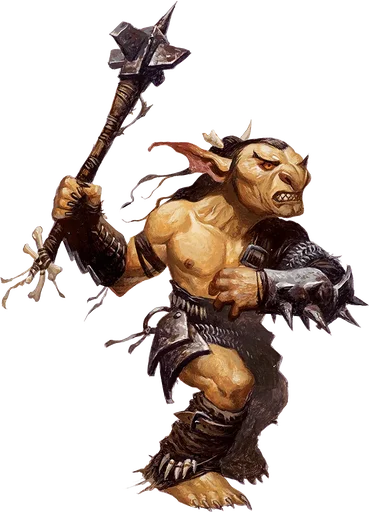 | Goblin Minion | 2024 SRD 5.2 | 1/8 | 25 | 12 | 7 | Nimble Escape | Dagger 20/60 |
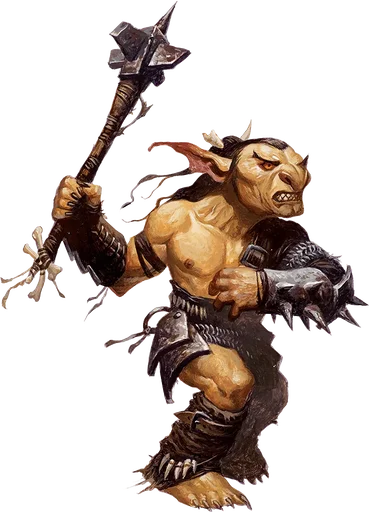 | Goblin Warrior | 2024 SRD 5.2 | 1/4 | 50 | 15 | 10 | Nimble Escape | Scimitar / Shortbow 80/320 |
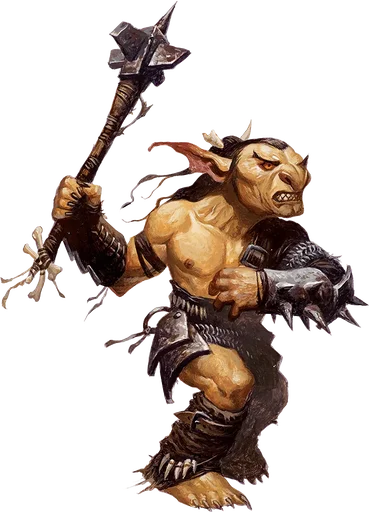 | Goblin Boss | 2024 SRD 5.2 | 1 | 200 | 17 | 21 | Nimble Escape | Scimitar (multiattack) / Shortbow 80/320 |
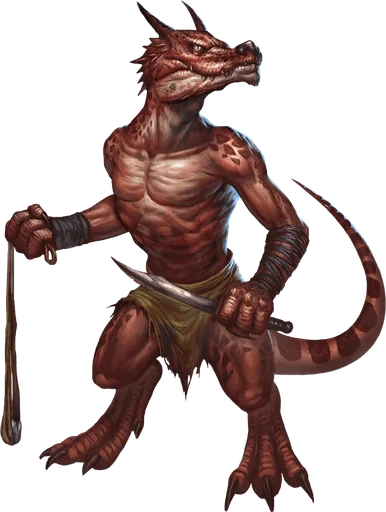 | Kobold | 2014 SRD/OGL | 1/8 | 25 | 12 | 5 | Pack Tactics | Dagger 20/60 / Sling 30/120 |
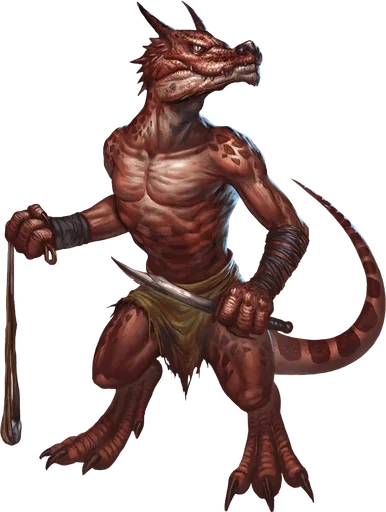 | Kobold Warrior | 2024 SRD 5.2 | 1/8 | 25 | 14 | 7 | Pack Tactics + Sunlight Sensitivity | Dagger 20/60 |
Behind the same XP-cheap "weak humanoid" slot sit two genuinely different designs:
Each trait answers a different question. Nimble Escape answers "I'm in melee and want out." Pack Tactics answers "my next attack must hit." The other three units (Goblin Minion, Goblin Boss, Kobold Warrior) are variants of these two designs - cheaper bodies, tougher elites, melee-only shock troops - and we'll see them in the wider tournament below.
How the traits actually work
Nimble Escape (every goblin). Lets the goblin take the Disengage or Hide action as a bonus action on each of its turns. Disengage means leaving an enemy's reach without provoking opportunity attacks. Hide is a Stealth check (+6 for the Goblin Warrior) that can render the goblin unseen if attackers fail a Perception check to spot it - and a Hidden creature has Disadvantage on attacks against it. Most monsters spend their action OR their bonus action; goblins effectively get both, and one of them is "stop being a target." The practical loop: shoot from cover, bonus-action Hide, move further into cover next turn, repeat. A goblin played correctly never stands still in melee.
Pack Tactics (every kobold). Gives the kobold Advantage on its attack rolls against any creature that has at least one of the kobold's allies within 5 ft of it (and that ally is not Incapacitated). The trigger is "ally adjacent to the target," not "ally adjacent to me" - so a single kobold in melee with the wizard enables fifteen kobolds at the back of the room to fire Slings into that wizard with Advantage. Mechanically, Advantage is roughly a +5 effective bonus to attack rolls. The trait is a team-wide accuracy multiplier whose strength scales with how many kobolds can pile around a single enemy. Spread the kobolds out and the trait does almost nothing; cluster them and almost every shot lands.
Experiment 1: the surround
Setup: 8 Goblin Warriors in a 4x2 cluster at the centre of a blank 20x20 grid; 16 Kobolds in a ring around them at distance 1. Every kobold starts adjacent to at least one goblin. Pack Tactics is satisfied for every attack from the first turn. 8,000 battles, four tactical profiles.
| Tactic combo | Goblin win | Kobolds left | Goblins left | Avg rounds |
|---|---|---|---|---|
| Goblins Smart, Kobolds Aggressive | 9.3% | 9.5 / 16 | 0.4 / 8 | 4.3 |
| Both Aggressive | 15.9% | 7.4 / 16 | 0.6 / 8 | 4.5 |
| Both Smart | 98.0% | 0.1 / 16 | 6.7 / 8 | 4.1 |
| Goblins try to kite, Kobolds press | 7.3% | 10.4 / 16 | 0.3 / 8 | 4.0 |
Three of the four rows agree: when kobolds press the advantage, they win 84-93%. Average length is about 4 rounds. Goblin survivors collapse to 0.3-0.6 of 8. The kobold horde sits where Pack Tactics works - in the cluster, on top of the targets - and grinds the goblins down two-to-one. This is the kobold encounter the lore promises.
The fourth row is the experiment's payoff: Both Smart, goblins win 97.8% from the identical starting position. The Smart tactic - "focus fire on wounded targets, retreat when low" - tells low-HP creatures to disengage when hurt. For Pack Tactics units this is exactly the wrong instinct. A kobold at HP 5 takes any meaningful hit and retreats, leaving melee, dropping out of the cluster, removing an ally from the next kobold's adjacency check, and costing the team Advantage on the next attack roll. Each individual kobold protecting itself collapses the whole formation's accuracy.
Smart is not smart for a swarm built on density. It is the heuristic of a unit that wins by surviving alone, applied to one that wins by sticking together. By round 3 a Smart kobold formation has fragmented into a dozen low-HP individuals scattered across the grid - which is exactly the distribution Goblin Warriors hunt best, with bonus-action Hide and 80 ft of Shortbow range. Kobolds survive together or not at all. The DM's job at the table is to keep them pressing, even when they're dying.
Experiment 2: when the teams approach normally
The surround is the high-leverage scenario. The wider question is what happens when teams aren't already in melee - when both sides walk into engagement range. We ran a 3x3 composition matrix at equal XP (400 XP per side) on three maps with two tactic profiles each, 1,500 trials per cell. 81,000 battles total.
The compositions:
| Goblins ↓ / Kobolds → | 16x Kobold | 16x Kobold Warrior | 8 Kobolds + 8 Kobold Warriors |
|---|---|---|---|
| 8x Goblin Warrior | 97.9% goblin win | 100% goblin win | 99.9% goblin win |
| 2x Goblin Boss | 2.1% goblin win | 49.5% goblin win | 6.2% goblin win |
| 1 Goblin Boss + 4 Goblin Warriors | 70.2% goblin win | 100.0% goblin win | 95.0% goblin win |
Goblins win 69.0% across all 81,000 battles - a meaningful tilt, but not a sweep. The matchup decides almost everything. 8x Goblin Warrior wins 97% or better against every kobold composition: pure ranged + Nimble Escape is what the design is built for, and it cashes in. 2x Goblin Boss is the worst goblin pick. AC 17 and HP 21 each look durable on paper, but two action-economy turns can't keep up with sixteen kobolds, and the horde focus-fires the Bosses down before multiattack matters. Reading vertically, the strongest kobold composition is the mixed 8K + 8KW front-and-back line - the standard Kobolds shoot from the rear while the Warriors absorb the front. The pure 16x Kobold Warrior team is the trap pick: no Sling means marching under arrow fire for several rounds before the first attack, and +2 AC isn't enough to make up the deficit.
| Kobold | Kobold Warrior | Kobolds + 8 Kobold | |
|---|---|---|---|
| Goblin Warrior | 98.2% | 100% | 100% |
| Goblin Boss | 0.1% | 41.2% | 1.2% |
| Goblin Boss + 4 Go | 75.2% | 100% | 96.1% |
Stone Bridge produces the most lopsided wins for whoever has range - the chasms force engagement through a narrow chokepoint where a Shortbow line picks off advancing Sling-less units. Forest Clearing's trees break up the kobold formation as it advances, blunting Pack Tactics density. Grass Plain is where the closest fights live: open terrain lets the kobold horde keep its formation intact across the approach. The closest cell in the dataset (1 Boss + 4 Warriors vs 16 Kobolds, Both Smart) sits there at 45.0% goblin.
Two cells worth pulling out. The 2x Goblin Boss vs 16 Kobold Warriors cell averages 49.5% goblin - effectively a coin flip - because shock kobolds without Slings can't focus the Bosses down before getting into melee, where AC 17 holds. And the mixed Goblin team (1 Boss + 4 Warriors) has the widest variance of any composition, swinging from 45% to 100% goblin depending entirely on whether the goblins have room to kite. The Boss draws fire, the four Warriors put bows on the back line, and how much room they get to spread out decides everything.
Two caveats not modelled by the sim. (1) The 2024 Goblin Boss has a Redirect Attack reaction that swaps incoming attacks onto an adjacent ally. In real play a Boss surrounded by Warriors becomes much harder to kill, so the 1 Boss + 4 Warriors team should perform somewhat better at the table than the simulator shows. (2) Kobold Warriors have Sunlight Sensitivity (disadvantage on attacks in sunlight), which would make the already-poor pure-shock team worse on outdoor maps.
What this means for DMs
- Smart is not smart for a swarm. If you are running kobolds (or wolves, hyenas, anything else with Pack Tactics or its equivalent), they win by sticking together and pressing the advantage. The retreat-when-hurt heuristic that keeps individual heroes alive collapses the formation's accuracy and trades the encounter away. Run them aggressive, even when they're dying.
- Composition matters more than species. "Goblins" win 69.0% overall, but specific compositions range from 2% goblin (Bosses vs Shooters) to 100% goblin (Warriors vs anything). The team you pick from the same XP budget can swing the outcome by ninety percentage points.
- The Sling decides the matchup. Every cell where the kobold side has Slings is at least competitive; every cell where it does not is a near-shutout. Pack Tactics matters, but a ranged attack matters more - the kobold trait lifts an existing weapon; without the weapon there is nothing to lift.
- Action economy beats per-body durability at scale. Goblin Bosses have 4x the HP and 4 more AC than a Warrior, but they bring 1/4 the actions per turn. Sixteen kobolds running Pack Tactics will focus down two AC 17 targets faster than you would guess. If you want a single elite to survive, give them mooks to spread the fire.
- Pack Tactics is a chokepoint mechanic; Nimble Escape is a cover mechanic. Tight spaces and density turn kobolds scary; cover and distance turn goblins lethal. Match the map to the team you're trying to make threatening.
Wondering how either side fares against actual adventurers? In our low-CR deadliness gauntlet, Kobold Warriors broke the classic level-1 party 20% cheaper than Goblin Warriors did - Pack Tactics scales with bodies, and bodies are what low XP buys.
Click any cell, row, or callout in this post to open that exact matchup in the simulator - composition, map, and tactics all preloaded. Run your own variations from there.